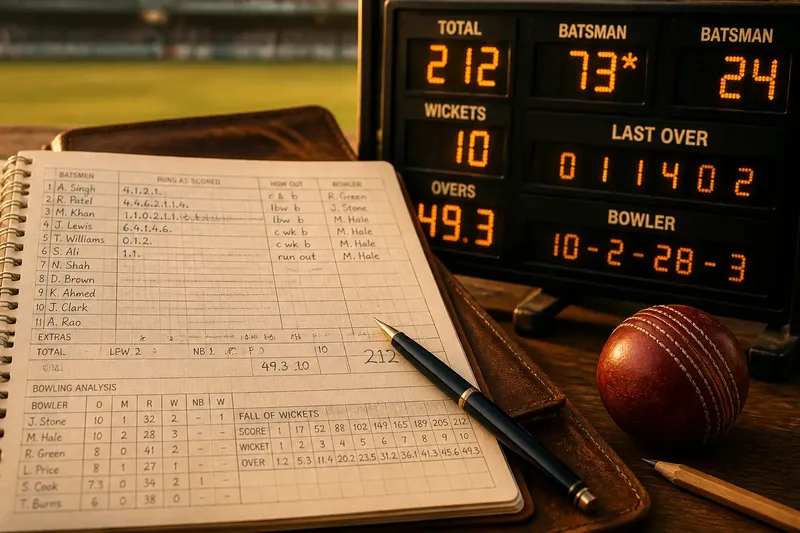
Your First Test Match: Follow the Session, Not Every Ball
Your first Test match is easier to follow when you track a session’s turning points, read field changes, and reconnect after a break without replaying every ball.
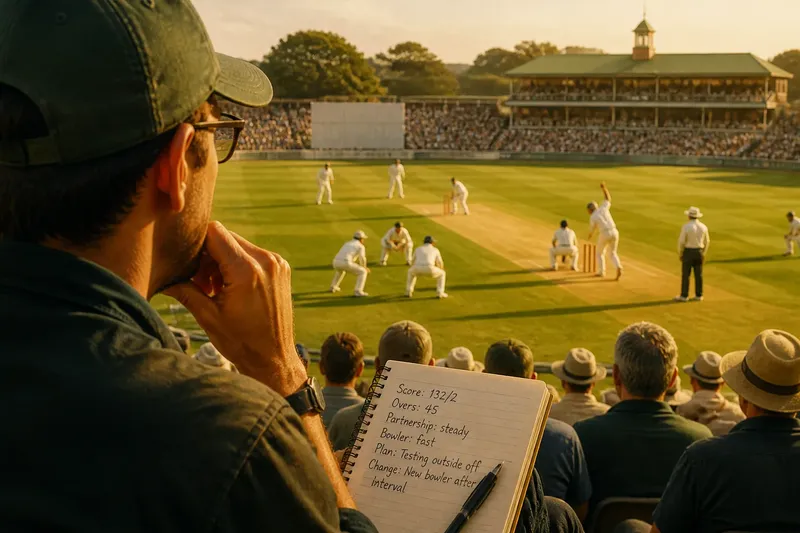
The common mistake at a first Test match is trying to keep a private record of every ball, every field adjustment, and every score update. That effort can make a session feel like bookkeeping instead of a live contest. A better approach is to follow one session through its changing decisions: what the bowler is attempting, what the batter is choosing, and how the field responds.
What does a Test match session make easier to see?
A session is a block of play between scheduled intervals. Unlike the full match, which can unfold over several days, a session gives you a contained stretch in which to observe a particular contest: a bowler working at one batter, a new pair trying to settle, or a captain adjusting the field.
At the start, identify the batting side, the bowler, the two batters, the score, and the wickets lost. You do not need to memorize names or the score from earlier days. This small snapshot tells you who has the immediate problem and what is at stake for the innings.
Then choose a question that fits what you can see. Is the bowler trying to draw a mistake outside the off stump? Is the batter protecting the wicket or looking for a scoring opportunity? Is the captain keeping fielders close to create pressure, or placing them near the boundary to limit runs?
Keep one question in mind for a few overs. The session becomes easier to read when you follow a contest, not every isolated event.
How do you read the duel between bowler and batter?
Watch the sequence around a delivery. A bowler may repeatedly pitch the ball in a similar area, hoping the batter will misjudge its movement or play at one that could have been left alone. The batter’s response—defending, leaving, or attacking—can show how they are weighing risk.
Pay attention to what happens after a batter scores. A single can rotate the strike, putting the other batter in front of the bowler. A boundary may prompt a field change or a different line. Neither event explains the whole plan by itself; look for the next adjustment.
A fielding captain’s choices offer clues. Several fielders close to the batter may support an attacking plan, while boundary riders can guard against a particular scoring shot. The positions are not a fixed code, so consider them alongside the bowler’s line and the batter’s choices.
For instance, imagine you start watching as a right-handed batter repeatedly leaves balls outside off stump while a close fielder waits near the bat. You note that the bowler keeps targeting the same area, then see the batter begin defending one of those deliveries. The useful change is that the batter has started playing at a ball previously left alone; you can now watch whether the bowler continues that line or the field shifts.
Follow the next choice, not a prediction about who will win.
What should you note when the session changes?
Some moments alter the available choices more than others. A wicket brings a new batter to the crease; a bowling change introduces a different style; a shift in scoring may lead the fielding side to protect a boundary. A long stretch without a wicket can matter too, if one side is holding its approach while the other searches for a new opening.
- Observation: A wicket has fallen. If a new batter arrives, then watch how the field and bowler test that batter; otherwise, if no wicket has fallen, keep tracking the existing pair’s response.
- Observation: A new bowler takes over. If the line or pace changes, then compare the batter’s response with the previous spell; otherwise, look for whether the same plan continues.
- Observation: Fielders move closer to the bat. If the bowler is also attacking the stumps, then watch for pressure on defensive shots; otherwise, check whether the field is set to restrict easy singles.
- Observation: Boundary fielders appear. If the batter has been scoring with powerful shots, then notice which area the field protects; otherwise, see whether those positions leave room for singles.
- Observation: The batters begin taking more singles. If the field leaves gaps, then watch whether they use them to rotate the strike; otherwise, note whether they are choosing to defend rather than risk a run.
- Observation: Scoring slows. If the bowler is keeping the batter quiet, then follow how the batter tries to break the pattern; otherwise, look for a field change or bowling change that may explain the slower pace.
These are prompts for observation, not rules that assign a single meaning to every field or shot. The score, wickets, and match situation help explain why a team might choose one plan over another.
How can you return after an interval without replaying everything?
Before leaving, make a short note of the score, wickets lost, batters at the crease, and one change you noticed. A phrase such as “new bowler, more balls outside off” is more useful than a long ball-by-ball account because it preserves the question you were following.
When you return, check the current score and wickets first. Then identify who is batting and bowling, and look for changes in the partnership or field. A scoreboard and a brief look at the broadcast graphic are usually enough to rejoin the session; if you are at the ground, the main screen can provide the same starting point.
Say you leave with the score showing two wickets down, a steady partnership, and a fast bowler testing the outside edge. After the interval, you see a new batter at the crease and a spinner bowling with a close fielder. Your notes tell you what changed: the partnership ended, and the bowling plan shifted. You can now watch how the new batter handles spin without reconstructing the overs you missed.
Let the interval do its job. A quick reset is more useful than trying to catch up on every detail.
Which questions help a new viewer follow a Test session?
Do I need to know every player’s name?
No. Start with the batter on strike, the partner at the other end, and the current bowler. Learn other names as they become relevant, such as when a new batter or bowler enters the action.
What if I miss several overs?
Check the score and wickets, then identify the current batters and bowler. Look for a recent wicket, bowling change, or shift in field placement to find the session’s current question.
Is a quiet session still worth watching?
It can be. A quiet stretch may show batters resisting a probing spell or a bowler maintaining a consistent plan. Watch for what each side is trying to make difficult for the other.
Should I choose a session based on the score?
The score can help, but it does not tell you how the contest is developing. A low-scoring period may contain a close battle over line and shot selection, while a fast-scoring spell may prompt the fielding captain to change the plan.
When is a natural point to stop watching?
A scheduled interval or the end of the day gives you a clear stopping point, but you can leave earlier if you need to. Before you go, check the score and name one change in the session: a wicket, a new bowling approach, or a partnership that has settled.
Keep your note descriptive rather than predictive. “New batter facing spin” gives you a useful place to resume; “the batting side will recover” is a forecast that may not help you understand what happens next.
The search phrase “first Test match” need not mean learning the entire match at once. Follow one session’s contest between bowler, batter, and captain, and the larger story will become easier to recognize whenever you return.
One clear observation is enough to carry forward: remember what changed, then watch what each side does about it.